
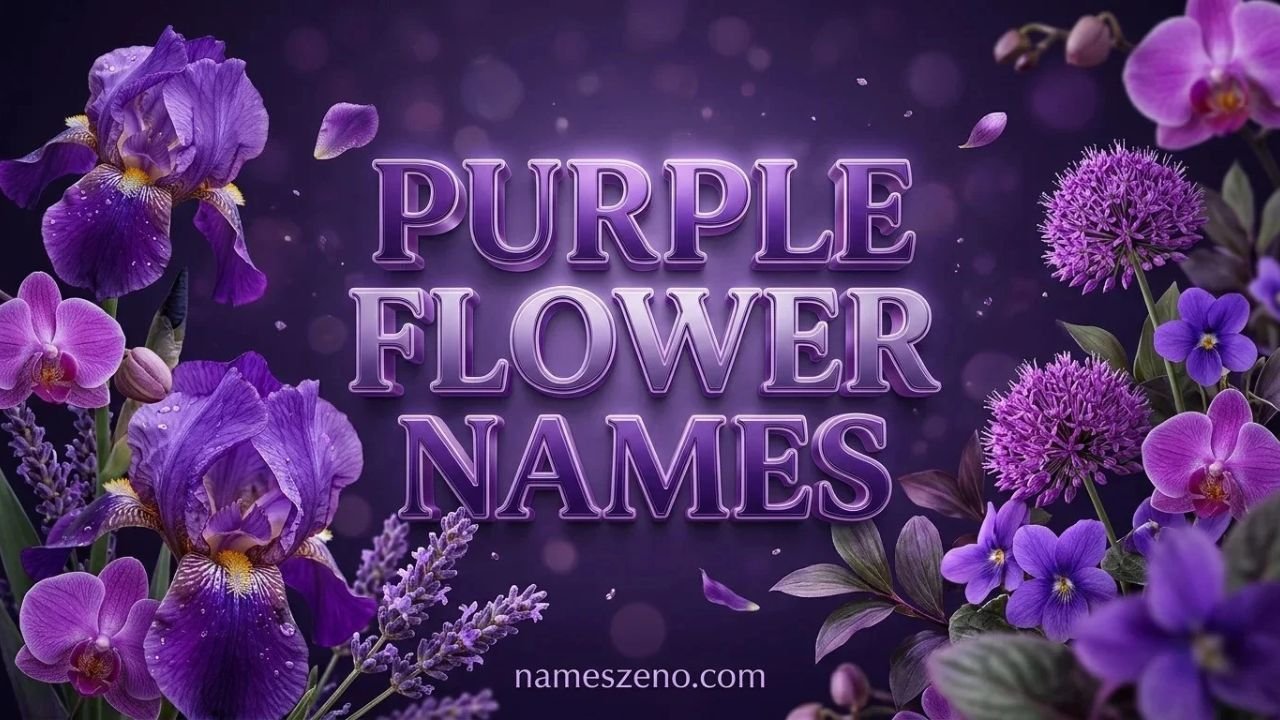
Bees can’t see red. Purple, though, hits them like a neon sign. That’s one reason these blooms keep gardens buzzing from spring to frost.
This guide lists 470 purple flowers names, from lavender flower classics to rare blooms most gardeners never meet. You’ll find bloom times, scents, sizes, and meanings in one place. Keep reading to see which purple flowers for gardens, pots, and bouquets fit your space.
Best Purple Flowers Names
Every great garden starts with a few sure things. These are the best purple flowers names, and gardeners trust them year after year.
Lavender, lilac, and violet flower types lead the pack. Iris and wisteria bring drama. Foxglove and delphinium add height.
- Lavender
- Lilac
- Violet
- Iris
- Orchid
- Wisteria
- Hydrangea
- Allium
- Foxglove
- Delphinium
- Clematis
- Petunia
- Pansy
- Aster
- Crocus
- Anemone
- Hyacinth
- Salvia
- Verbena
- Lupine
Wondering which of these are truly popular? The next list answers that.
Popular Purple Flowers and Their Names
Walk into any garden center and you’ll spot these common purple flowers within minutes. You’ve probably seen most of them without learning the names.
This list gives you purple flowers and their names in plain English. Purple coneflower feeds finches in fall. Purple balloon flower pops open like tiny paper lanterns. Purple morning glory climbs fences by sunrise. Purple cornflower, also called bachelor’s button, fits cut flower beds perfectly.
- Purple Coneflower
- Bellflower
- Balloon Flower
- Morning Glory
- Passionflower
- Cornflower
- Monkshood
- Statice
- Stock
- Primrose
- Heather
- Thistle
- Sweet Pea
- Catmint
- Lantana
- Cranesbill
- Scabiosa
- Phlox
- Veronica
- Gentian
- Lobelia
- Agapanthus
- Cosmos
- Zinnia
- Dahlia
Want the prettiest ones for your own yard? Keep going.
Beautiful Purple Flowers for Gardens
Purple garden flowers play peacemaker. They cool hot oranges and calm loud yellows. Pair them with silver foliage for a soft, polished look.
For structure, add purple flowering shrubs like butterfly bush and chaste tree. Then fill gaps with spikes, globes, and daisies. Mixing shapes keeps purple flowers for gardens from feeling flat.
- Butterfly Bush
- Chaste Tree
- Rhododendron
- Azalea
- Rose of Sharon
- Sea Holly
- Globe Thistle
- Russian Sage
- Bugleweed
- Penstemon
- Hellebore
- Columbine
- Gladiolus
- Ageratum
- Sweet William
- Nigella
- Browallia
- Salpiglossis
- Purple Mullein
- Camassia
Ready for something nobody on your street grows?
Rare and Unique Purple Flower Names
Rare purple flowers names sound like spells. Cobaea, black bat flower, and snake’s head fritillary seldom show up at big-box stores. Finding one feels like winning a small lottery.
Climbing purple flowers names deserve a spot here too. Cobaea, hardenbergia, and purple bell vine scramble up trellises fast. Many of these purple flowering plants names will send you hunting at specialty nurseries.
- Cobaea
- Pasque Flower
- Lisianthus
- Black Bat Flower
- Snake’s Head Fritillary
- Hardenbergia
- Princess Flower
- Jacaranda
- Empress Tree
- Spiderwort
- Toadflax
- Corydalis
- Brunfelsia
- Cape Primrose
- Purple Bell Vine
- Mexican Petunia
- Blue Trumpet Vine
- Queen’s Wreath
- Meadow Rue
- Butterfly Pea
- Wake Robin
- Pride of Madeira
- Fairy Fan Flower
- Bluebeard
- Dead Nettle
Rare doesn’t always mean big. Sometimes it means tiny.
Small Purple Flowers With Delicate Blooms
Small purple flowers names often hide the best surprises. Grape hyacinth, johnny jump up, and siberian squill stay close to the ground. Their blooms look like dropped jewels.
Each violet flower here suits rock gardens, borders, and tight corners. Plant them in drifts for real impact. A single plant gets lost, but a swarm of them glows.
- Grape Hyacinth
- Johnny Jump Up
- Sweet Alyssum
- Creeping Thyme
- Siberian Squill
- Glory of the Snow
- Self-Heal
- Million Bells
- Aubrieta
- Mazus
- Viola
- Lungwort
- Reticulated Iris
- Purple Rock Cress
- Hepatica
- Purple Oxalis
- Dwarf Morning Glory
- Wishbone Flower
- Nemesia
- Swan River Daisy
Now flip the scale. Let’s go tall.
Tall Purple Flowers for Outdoor Gardens
Tall purple flowers names make a garden feel grown up. Plant these at the back of a border and watch the bed gain height. Tall stems also screen fences and sheds.
Purple delphinium and purple foxglove lead the skyline. A purple allium floats above the rest like slow-motion fireworks. Check the table below before you plan your layers.
| Plant | Typical Height |
| Larkspur | 2 to 4 feet |
| Globemaster Allium | 3 to 4 feet |
| Foxglove | 3 to 5 feet |
| Delphinium | 4 to 6 feet |
| Joe Pye Weed | 5 to 7 feet |
| Hollyhock | 5 to 8 feet |
Note: Figures are estimates and may vary by source.
- Larkspur
- Hollyhock
- Joe Pye Weed
- Ironweed
- Globemaster Allium
- Purple Sensation Allium
- Blazing Star
- Anise Hyssop
- Tall Verbena
- Cardoon
- Honesty
- Indigo Spires Salvia
- Purple Loosestrife
- Black Knight Delphinium
- Mexican Bush Sage
- Great Blue Lobelia
- Culver’s Root
- Tatarian Aster
- Spider Flower
- Teasel
Height is one story. Timing is another.
Purple Flowers That Bloom in Spring
Spring is when purple steals the show. Purple flowers that bloom in spring appear before most perennials even wake up.
Purple crocus pushes through late snow. Purple hyacinth fills the air with scent. Purple anemone and purple wisteria follow as the days warm.
- Purple Tulip
- Bearded Iris
- Siberian Iris
- Dutch Iris
- Redbud
- Creeping Phlox
- Virginia Bluebells
- Spanish Bluebell
- Dame’s Rocket
- Persian Lily
- Bowles Mauve Wallflower
- Purple Magnolia
- Spring Starflower
- Purple Ranunculus
- Grecian Windflower
- Wild Blue Phlox
- English Bluebell
- Wood Anemone
- Sweet Violet
- Early Purple Orchid
Summer brings a whole new cast.
Purple Flowers That Bloom in Summer
Heat doesn’t scare purple flowers that bloom in summer. These plants thrive when the sun hits hardest.
Purple salvia, purple verbena, and purple clematis keep color going for weeks. Deadhead spent blooms to keep new buds coming.
- Garden Phlox
- May Night Salvia
- Walker’s Low Catmint
- Rozanne Geranium
- Purple Prairie Clover
- Baptisia
- Crape Myrtle
- Bougainvillea
- Gomphrena
- Violetta Mullein
- Royal Candles Speedwell
- Cupid’s Dart
- Jackmanii Clematis
- Blue Fortune Hyssop
- Mealy Cup Sage
- Cup Flower
- Purple Hibiscus
- Lilyturf
- Clustered Bellflower
- Mist Flower
But can you keep the purple going all year?
Purple Flowers That Bloom All Year
Honest answer: no purple flower blooms in every climate for twelve months. Still, smart planting stretches color a long way.
Mild climates give you the best shot. Winter pansy, winter heath, and algerian iris carry the cold months. Purple pansy and purple primrose handle chilly weather well. Purple petunia takes over once frost fades.
| Season | Months | Purple Examples |
| Spring | March to May | Crocus, Hyacinth, Lilac |
| Summer | June to August | Salvia, Verbena, Phlox |
| Fall | September to November | Aster, Autumn Crocus, Sage |
| Winter | December to February | Winter Pansy, Winter Heath |
Note: Months assume the Northern Hemisphere. Figures are estimates and may vary by source.
- Mexican Heather
- Sweet Pea Shrub
- Society Garlic
- Blue Daze
- Katie Ruellia
- Winter Pansy
- Winter Heath
- Algerian Iris
- Hebe
- Amistad Sage
- Mona Lavender
- Homestead Purple Verbena
- Cape Plumbago
- Wave Petunia
- Mystic Spires Sage
Color is lovely. Scent adds another layer.
Purple Flowers With Fragrant Scents
Step into a lavender field with your eyes closed and you’ll understand scent instantly. Fragrant purple flowers names deserve a spot near patios, paths, and open windows.
Heliotrope smells like vanilla and cherry. Freesia and sweet pea can perfume a whole room. Cut stems also work as purple flowers for bouquets. Grow a row and you’ll have purple flowers for cutting gardens that pay you back all summer.
- Heliotrope
- Nicotiana
- Daphne
- Freesia
- Blue Moon Rose
- Twilight Zone Rose
- Matucana Sweet Pea
- Fountain Butterfly Bush
- Hyssop
- Patchouli
- Purple Basil
- Oregano
- Scented Geranium
- Hardy Cyclamen
- Chinese Wisteria
- Cottage Pinks
- Black Knight Butterfly Bush
- Rosemary
- Wild Thyme
- Mint
Scent is great. Seeing the bloom matters too.
Purple Flowers With Pictures and Names
Names are hard to remember. Shapes are easy. This section pairs purple flowers with pictures in words, so you can spot each one on a walk.
Look for stars, bells, spikes, pom-poms, and daisies. Borage forms tiny stars. Canterbury bells hang like little bells. Drumstick allium looks like a tiny purple drumstick. Botanical names help you search online because common names change by region.
- Borage
- Canterbury Bells
- Caradonna Sage
- Drumstick Allium
- Seaside Daisy
- Cineraria
- African Daisy
- Gloxinia
- Orchid Tree
- Fuchsia
- Mallow
- Purple Calla Lily
- Monkey Flower
- Purple Poppy Mallow
- Blue Marguerite
Soft shades come next.
Light Purple Flowers With Soft Colors
Not every purple needs to shout. Light purple flowers names bring a pastel hush to borders. They look dreamy in morning light.
Purple hydrangea mopheads glow even in part shade. Lilac wonder tulip and dutch crocus add pale color in spring. Pale shades also photograph beautifully, which makes them popular purple flowers for weddings.
- Pale Purple Coneflower
- Dalmatian Bellflower
- Mophead Hydrangea
- Lacecap Hydrangea
- Six Hills Giant Catmint
- Chicory
- Texas Sage
- Lavender Ice Plant
- American Wisteria
- Meadow Sage
- Hosta
- Leadwort
- California Lilac
- Dutch Crocus
- Lilac Wonder Tulip
- Woodland Sage
- Sunny Border Blue Speedwell
- Poppy Anemone
- Rock Rose
- Tree Mallow
Now for the opposite mood.
Dark Purple Flowers With Deep Hues
Dark purple flowers names carry mystery. Think midnight velvet, red wine, and fresh ink.
Queen of the night tulip looks nearly black. Black velvet petunia and nigra hollyhock pull the same trick. Purple monkshood and purple foxglove look dramatic, yet both are toxic. Keep them away from kids and pets.
Plant dark blooms near white or silver. Contrast makes them pop.
- Queen of the Night Tulip
- Negrita Tulip
- Black Velvet Petunia
- Black Knight Scabiosa
- Before the Storm Iris
- Midnight Nigella
- Molly Sanderson Viola
- Etoile Violette Clematis
- Black and Blue Sage
- Black Barlow Columbine
- Black Pearl Calla
- Royal Purple Wisteria
- Woodstock Hyacinth
- Sooty Dianthus
- Black Peony Poppy
- Onyx Odyssey Hellebore
- Black Prince Clematis
- Dark Knight Bluebeard
- Purple Haze Hyssop
- Nigra Hollyhock
Two famous names deserve their own spotlight.
Lavender and Lilac Flowers With Purple Blooms
Lavender purple flowers get all the love, and they’ve earned it. A lilac flower cluster can perfume a whole street in late spring.
Lavender handles dry soil, which makes it one of the best drought tolerant purple flowers. Lilacs prefer full sun and cold winters. This list covers ten of each.
- Hidcote Lavender
- Munstead Lavender
- Provence Lavender
- Grosso Lavender
- Phenomenal Lavender
- Royal Velvet Lavender
- Spanish Lavender
- French Lavender
- Goodwin Creek Grey Lavender
- Folgate Lavender
- Miss Kim Lilac
- Sensation Lilac
- Charles Joly Lilac
- President Lincoln Lilac
- Katherine Havemeyer Lilac
- Bloomerang Lilac
- Palibin Lilac
- Ludwig Spaeth Lilac
- Persian Lilac
- Hungarian Lilac
Wild cousins come next.
Purple Wildflowers Found in Nature
Nature plants better than any designer. Purple wildflowers names read like a meadow walk: harebell, fireweed, and bluebonnet.
Many gardeners file Texas bluebonnet under purple lupine. Native blooms also feed local insects, so they make excellent purple flowers for pollinators. Buy seed from nurseries instead of digging plants from the wild. Some wild purples, like purple loosestrife, also spread aggressively in certain regions.
- Wild Bergamot
- Texas Bluebonnet
- Viper’s Bugloss
- Harebell
- Fireweed
- Tufted Vetch
- Bush Vetch
- Meadow Clary
- Field Scabious
- Devil’s-Bit Scabious
- Knapweed
- Musk Thistle
- Milk Thistle
- Bull Thistle
- New England Aster
- Blue Vervain
- Wild Petunia
- Shooting Star
- Ground Ivy
- Henbit
- Blue-Eyed Grass
- Fringed Gentian
- Purple Saxifrage
- Wild Hyacinth
- Meadow Cranesbill
Pots come next. No yard required.
Purple Flowers for Pots and Containers
No garden? No problem. Purple flowers for pots turn balconies and steps into color zones.
Purple flowers for containers should stay compact or trail over the edge. Angelonia, bacopa, and supertunia petunia do both. Use pots with drainage holes. Water when the top inch of soil feels dry.
- Angelonia
- Snapdragon
- Pentas
- Bacopa
- Polyanthus
- Carpathian Bellflower
- Victoria Blue Salvia
- Wood’s Purple Aster
- Little Spire Russian Sage
- Blue Chip Butterfly Bush
- Superbena Verbena
- Supertunia Petunia
- Trailing Bellflower
- Blue Mirror Delphinium
- Annual Phlox
- Periwinkle
- Dwarf Bearded Iris
- Playin’ the Blues Salvia
- Cupani Sweet Pea
- Riviera Midnight Blue Lobelia
What if you don’t even have a balcony?
Purple Flowers for Indoor Growing
Indoor growing works if you respect light. A bright window changes everything.
A purple orchid, especially a moth orchid, blooms for weeks. African violet flowers again and again under steady light. Look for purple varieties of kalanchoe and amaryllis to brighten winter shelves. Avoid cold drafts and soggy soil.
- African Violet
- Moth Orchid
- Cattleya Orchid
- Dendrobium Orchid
- Vanda Orchid
- Cymbidium Orchid
- Slipper Orchid
- Persian Cyclamen
- Amaryllis
- Purple Anthurium
- Chrysanthemum
- Gerbera Daisy
- Primula Obconica
- Kalanchoe
- Persian Violet
- Bromeliad
- Air Plant
- Miniature Rose
- Oncidium Orchid
- Miltonia Orchid
Pollinators love gardens more than shelves, though.
Purple Flowers That Attract Butterflies and Bees
Bees and butterflies treat purple blooms like landing strips. Purple flowers that attract butterflies also feed bees and moths.
Plant them in full sun. Group them in clumps of three or five. Pollinators spot big patches first. Skip heavy double blooms, because single-petal flowers give easier access to nectar.
- Bee Balm
- Catnip
- Calamint
- Germander
- Lacy Phacelia
- Honeywort
- Comfrey
- Azure Sage
- Sandpaper Verbena
- Hairy Vetch
- Red Clover
- Mountain Bluet
- Aromatic Aster
- Globe Artichoke
- Bell Heather
- Cross-Leaved Heath
- Spike Speedwell
- Sweet Scabious
- Gentian Sage
- Siberian Bugloss
Not everyone has time for fussy plants, though.
Purple Flowers That Are Easy to Grow
Busy schedule? Low maintenance purple flowers will keep you sane. These tough plants forgive missed waterings.
Lamb’s ear, autumn sage, and creeping veronica thrive on neglect. Many also make great purple flowers for landscaping along walkways and slopes. Use caution with hyacinth bean and autumn crocus. Both are toxic if eaten.
- Impatiens
- Lamb’s Ear
- Stokes’ Aster
- Purple Daylily
- Autumn Crocus
- Kent Beauty Oregano
- Creeping Veronica
- Obedient Plant
- Hyacinth Bean
- Forget-Me-Not
- Alkanet
- Goodness Grows Speedwell
- Rose Mallow
- Common Sage
- Johnson’s Blue Geranium
- Tommasini Crocus
- Star of Persia Allium
- Tumbleweed Allium
- Autumn Sage
- Chinese Forget-Me-Not
Perennials take that idea even further.
Perennial Purple Flowers That Return Every Year
Plant once, enjoy for years. Purple perennial flowers return each spring and often grow bigger.
Divide clumps every few years to keep them strong. Shade loving purple flowers such as barrenwort and jacob’s ladder fill dim corners. These purple flowers for shade rescue spots where lawns give up.
- Chinese Ground Orchid
- Orchid Primrose
- Jacob’s Ladder
- Japanese Iris
- Dalmatian Iris
- Barrenwort
- Drumstick Primrose
- Purple Dome Aster
- Millenium Allium
- Pacific Giant Delphinium
- Peach-Leaved Bellflower
- Whorled Sage
- Brookside Geranium
- Auricula
- Everlasting Pea
- Alpine Aster
- Kobold Gayfeather
- Blue Hill Sage
- Raydon’s Favorite Aster
- Blue Flax
- Siberian Catmint
- Gentian Speedwell
- Clump Verbena
- East Friesland Sage
- Great Bellflower
Annuals play a different game.
Annual Purple Flowers for Seasonal Gardens
Annuals live fast and bloom hard. Purple annual flowers fill gaps, pots, and borders in a single season.
Sow seeds after the last frost. Pinch tips to encourage more branches. Sweet sultan and china aster look right at home in cutting rows.
- China Aster
- Breadseed Poppy
- Farewell to Spring
- Globe Candytuft
- Baby Blue Eyes
- Chinese Houses
- Blue Monday Sage
- Blue Bedder Salvia
- Sweet Sultan
- Purple Prince Zinnia
- Blue Lace Flower
- Night Phlox
- Imagination Verbena
- Tapien Verbena
- Rose of Heaven
- Sensation Cosmos
- Fairy Primrose
- Heavenly Blue Morning Glory
- Crystal Palace Lobelia
- Rat-Tail Statice
Some purple flowers do more than look pretty.
Purple Flowers With Medicinal or Traditional Uses
People have used some purple blooms in teas, remedies, and kitchens for centuries. This section covers traditional uses only.
Never treat these plants as medical advice. Several are toxic, so talk to a qualified professional before using any plant. Chives add flavor and flowers to salads. Skullcap, valerian, and holy basil have long histories in herbal traditions.
- Chives
- Skullcap
- Purple Betony
- Holy Basil
- Heartsease
- Motherwort
- Narrow-Leaved Coneflower
- Burdock
- Alfalfa
- Clary Sage
- Valerian
- Blue Lotus
- Danshen
- Kudzu
- Goji
Next, the hidden meanings behind the color.
Purple Flowers and Their Meanings and Symbolism
Purple has long signaled royalty, mystery, and calm. Meanings shift by culture, but the themes repeat. This purple flowers list with meanings starts with a quick table.
Purple flower symbolism also reaches into religion and art. That depth is why the color feels so rich.
| Flower | Common Meaning |
| Lavender | Devotion and calm |
| Lilac | First love |
| Iris | Wisdom and hope |
| Violet | Faithfulness and modesty |
| Purple Rose | Enchantment |
| Purple Hyacinth | Sorrow and a plea for forgiveness |
| Pansy | Thoughtfulness |
| Aster | Patience |
Note: Meanings come from traditional flower language and vary by culture.
Here are more blooms tied to romance, luxury, and spirit:
- Purple Carnation
- Purple Rose
- Purple Lotus
- Peruvian Lily
- Pyramidal Orchid
- Marsh Orchid
- Pleione
- Philippine Ground Orchid
- Himalayan Blue Poppy
- Saffron Crocus
- Cuban Lily
- Brodiaea
- Throatwort
- Ladybells
- Blue Potato Bush
Which meanings fit love, royalty, and peace?
Purple Flowers That Represent Love, Royalty, and Peace
Match the flower to the moment. Purple flowers that represent love, royalty, and peace make thoughtful gifts.
Lilac says first love. Purple rose signals enchantment. Lavender brings peace. Many couples choose purple flowers for weddings to add romance without going red. Mix soft lilac with white for a gentle look.
These lesser-known blooms fit the same moods:
- Purple Lily
- Purple Poppy
- Duranta
- Blue Butterfly Bush
- Babiana
- Melastoma
- Wahlenbergia
- Edraianthus
- Jasione
- Phyteuma
Time to pick yours.
How to Choose the Best Purple Flowers for Your Garden
Choosing feels hard when 470 options stare back at you. Use four quick filters:
- Light: Full sun, part shade, or shade.
- Climate: Check your hardiness zone before you buy.
- Purpose: Pots, borders, cutting, or pollinators.
- Bloom time: Layer spring, summer, and fall color.
Start with three plants, not thirty. Learn what thrives in your soil, then expand. Your local nursery knows your conditions better than any list.
You now hold a pocket botanical guide. Pick one bloom today. Plant it, name it, and watch your garden turn purple one flower at a time.
FAQs
What are the most popular purple flowers?
Lavender, lilac, iris, petunia, wisteria, and hydrangea are among the most popular purple flowers gardeners grow.
What are some rare purple flowers?
Black bat flower, cobaea, snake’s head fritillary, and pasque flower rank among the rarer purple blooms.
Which purple flowers are easiest to grow?
Lamb’s ear, autumn sage, creeping veronica, and impatiens grow easily with very little care.
What purple flowers bloom throughout summer?
Garden phlox, salvia, verbena, lantana, and catmint keep blooming through most of summer with regular deadheading.
What do purple flowers symbolize?
Purple flowers often symbolize royalty, mystery, creativity, and calm. Meanings shift with the flower and the culture.
Which purple flowers are best for pots and containers?
Petunia, angelonia, pansy, verbena, and bacopa suit pots well because they stay compact or trail nicely.
Conclusion
Purple flowers add color, scent, and life to every kind of space, whether it’s a big border, a small pot, or a sunny windowsill. From classics like lavender and lilac to rare blooms like cobaea and snake’s head fritillary, there is a purple flower for every garden style and season.
Start small by choosing a few plants that match your light, climate, and purpose. Once you see what thrives in your soil, you can expand your collection and let your garden turn purple one bloom at a time.

5 years of experience working on names web projects, creating trending, SEO-friendly, creative name content with consistency and quality. Humanity really turned naming things into a full-time economy.